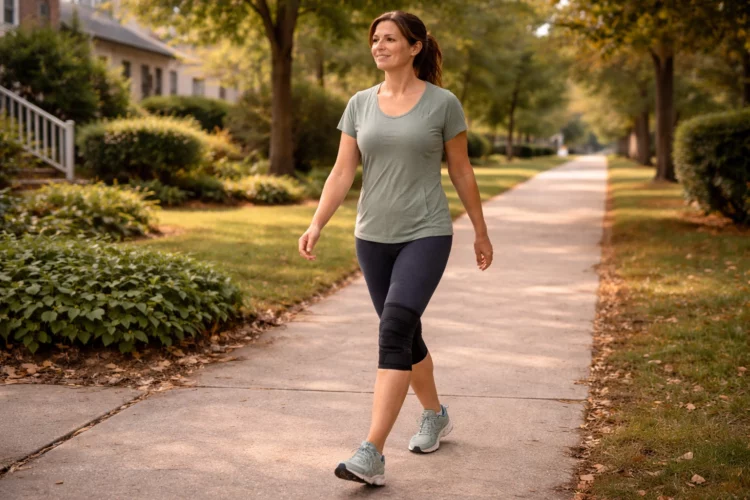
The physio room smelled faintly of disinfectant and eucalyptus when the answer landed. Lucy, 42, a former runner who now split her workouts between the pool and a Pilates mat, sat on the edge of the exam table with that familiar dull ache wrapped around both knees. She expected the usual advice. Keep swimming. Keep doing Pilates. Avoid impact.
Instead, her therapist glanced up from the scan and said, almost casually, “You should start walking.”
Lucy laughed, then stopped. Walking was the thing she had been avoiding for years. It felt too basic, too ordinary, not serious enough to count as exercise. She had traded miles on the pavement for careful laps and controlled core work, all in the name of protecting her joints.
Now she was being told that walking, the most overlooked movement of all, might actually help her knees more than the workouts she trusted most.
Why Walking Has a Bad Reputation With Sore Knees
Ask people with knee pain how they exercise and the answers are usually the same. Swimming. Pilates. Low-impact only. Walking rarely makes the list.
In the U.S., walking is often framed as something you do incidentally. Parking lots, errands, dog walks, school drop-offs. It does not feel like training. When knees start hurting, many people cut back on walking first and replace it with activities that feel safer and more controlled.
The logic makes sense on the surface. Swimming removes body weight. Pilates builds strength without pounding joints. Both can be excellent tools. The problem is not what they include, but what they leave out.
Daily life still requires your knees to carry you. Stairs, uneven sidewalks, airport terminals, grocery stores, long workdays on your feet. When walking disappears from your routine, your knees quietly lose practice at handling the very loads they are expected to manage every day.
That is where trouble starts.
The Overlooked Benefit of Gentle Load
A growing number of physical therapists and sports medicine doctors are pointing to a simple truth. Knees do not only need rest. They need regular, manageable load to stay resilient.
Walking provides that load in a controlled, repeatable way. Each step sends a small signal through cartilage, tendons, and muscles saying, “This joint is still being used.” Over time, those signals help maintain strength, coordination, and tolerance.
Contrast that with long stretches of swimming or mat work alone. You may feel fitter overall, but your knees never fully rehearse the demands of real-world movement. When you suddenly need to climb stairs or walk farther than usual, pain shows up fast.
Mark, 51, learned this the hard way. A former recreational basketball player with cartilage damage, he switched to swimming several times a week to protect his knees. His cardio improved. His knee pain did not.
When his local pool closed for maintenance, he reluctantly started brisk walking around his hilly neighborhood. Twenty minutes turned into thirty. He kept the pace steady and conversational. Six weeks later, his follow-up showed less swelling, better leg strength, and noticeably less pain going downhill.
The only meaningful change was walking.
Plank Hold Timing by Age: How Long to Hold a Plank for Real Core Strength Without Strain
This 10-Minute Yoga Flow Gently Improves Flexibility and Loosens Stiff Muscles at Any Time of Day
Why Swimming and Pilates Sometimes Fall Short on Their Own
Swimming and Pilates are not the villains here. They are powerful support tools. They improve mobility, posture, breathing, and overall strength. For many people, they reduce pain in the short term.
What they often do not provide is progressive weight-bearing. Knees evolved to manage load. Remove that stimulus for too long and the joint becomes more sensitive, not less.
This is why some people feel fine in the pool or studio but struggle the moment they return to everyday activities. The knee has not been trained for the job it is being asked to do.
Walking bridges that gap.
How to Walk for Your Knees, Not Against Them
Start Smaller Than You Think You Need To
For irritated knees, more is not better at the start. Begin with 10 to 15 minutes on flat ground, three or four times a week. Choose a pace where you can speak in short sentences but feel slightly challenged.
If pain stays the same or improves within 24 hours, you can add five minutes to one or two walks the following week.
Use Pain as Information, Not a Stop Sign
Many clinicians suggest using a simple 0 to 10 pain scale. Aim to keep discomfort at a mild level, around 3 or below, during the walk. Pain should settle quickly afterward and not be worse the next morning.
Sharp pain, swelling, locking, or lingering soreness are signs to scale back, not to push through.
Separate Training Walks From Daily Steps
Errand walking and purposeful walking are not the same. Treat your planned 20 to 40 minute walk as exercise. Comfortable shoes, no phone scrolling, steady pace.
Everything else you walk that day is a bonus, not a requirement.
Progress With Intention
Once flat walks feel easy, add variety slowly. A small hill once a week. A short flight of stairs. Slight changes in terrain. These micro-challenges help knees adapt without overwhelming them.
Common Mistakes That Make Walking Feel Worse
One of the biggest errors is going all in too fast. People jump from avoiding walking to hitting step goals overnight. Knees respond with swelling and pain, and walking gets blamed again.
Another mistake is treating walking as background noise. Unsupportive shoes, heavy bags, distracted posture. Small details matter when joints are sensitive.
Walking works best when it is deliberate and dosed, not rushed or careless.
When the Boring Option Becomes the Most Effective One
It is normal to feel defensive about the workouts you love. Swimming and Pilates often feel sophisticated and safe. Walking feels plain.
But many people with chronic knee pain discover that the simplest option is the missing piece, not the replacement. You do not need to quit the pool or the mat. You need to stop asking them to do a job they were never meant to do alone.
The people who see the biggest improvements are not perfect. They do not walk every day without fail. They aim for consistency over intensity. They accumulate months of manageable walking instead of chasing dramatic fixes.
What This Shift Says About Knee Health Today
The idea that all impact is bad for knees is slowly fading. In its place is a more practical message. Joints need movement, load, and recovery in the right balance.
Walking sits right in that middle ground. It is accessible, adjustable, and closely matched to real life. For many sore knees, it is not the problem. It is the practice they have been missing.
Key Takeaways
Walking applies gentle, repeated load that helps knees adapt to daily demands.
Starting with short, flat walks and tracking pain reduces flare-ups and fear of movement.
Combining walking with swimming or Pilates creates a more complete and resilient plan.
Frequently Asked Questions
Is walking safe if I’ve been told to avoid impact?
Many specialists distinguish between high impact, like jumping or running, and low impact, like walking. For a large number of people with arthritis or old injuries, controlled walking is recommended as long as pain remains mild and settles within a day.
Should I stop swimming or Pilates once I add walking?
No. Think of swimming and Pilates as support work. Walking adds the weight-bearing element your knees need. The goal is balance, not replacement.
What if my knees hurt after just a few minutes?
Your starting point may be as low as three to five minutes. Hold that level for a week or two. Progress only when pain response is stable. Slow progress is still progress.
Is treadmill walking as helpful as walking outside?
Treadmills offer predictable surfaces and can feel easier at first. Outdoor walking introduces natural variation that prepares knees for real environments. Many people rotate between both.
Do shoes really matter?
Yes. Choose shoes that feel comfortable immediately and provide stability. If pain persists, a gait assessment with a professional can be useful, especially if you have old injuries or foot issues.
Sometimes the most effective solution is not the newest or trendiest one. It is the habit that quietly teaches your body how to function again, one step at a time.