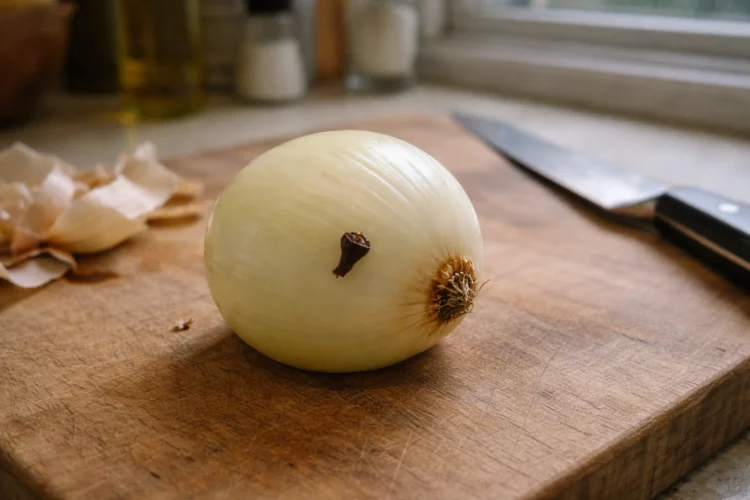
If you’ve ever seen an onion with a clove pushed into it, it can look a bit odd, almost like a kitchen superstition. In reality, it’s a very old, very practical cooking technique with roots in classic European cooking.
It’s not decorative. And it’s not about saving time.
It’s about control.
The tradition behind the clove-studded onion
This technique comes from traditional French cooking, where it’s known as an onion clouté. The idea is simple: take a peeled onion and insert one or more whole cloves into it before adding it to soups, stocks, sauces, or braising liquids.
Cooks have been doing this for centuries, long before spice grinders or bottled broths existed. The goal was to add warmth and depth without overpowering the dish.
What the clove is supposed to do
Cloves are intense. A little goes a long way. When they’re ground or added loose, they can quickly dominate a dish with a sharp, medicinal sweetness.
By inserting a whole clove into an onion, you get a slow, gentle infusion instead of a punch.
The onion softens the clove’s strength, while the clove gives the onion a subtle aromatic edge. Together, they create a rounded, background flavour that feels present but hard to identify.
You don’t taste “clove.”
You just notice the dish tastes fuller.
Why the clove goes into the onion specifically
There are three practical reasons.
First, flavour balance. Onion is already a base ingredient in many savoury dishes. Adding clove directly to it keeps the spice from floating freely and releasing too fast.
Second, easy removal. Once cooking is done, you simply lift out the onion and discard it. No hunting for whole cloves in a pot of soup.
Third, aroma control. The onion acts like a buffer, releasing the clove’s oils slowly as it cooks, especially in liquid.
It’s a very controlled way of seasoning.
Why People Hang a Bay Leaf on the Door and What It’s For
Why People Put a Clove in an Onion and What It’s Actually Meant to Do
How it’s commonly used
You’ll most often see a clove-studded onion added to:
Stocks and broths
Bechamel and cream sauces
Braised meats
Stews and soups
Rice or lentil dishes in some cuisines
In classic white sauces, one clove is usually enough. In large stockpots, cooks might use two or three, depending on volume.
Anything more than that risks tipping the flavour from comforting to overpowering.
Does it have any non-culinary purpose?
You might hear claims that a clove in an onion purifies the air, repels insects, or absorbs illness. Those ideas float around online, but historically, the clove-in-onion practice is culinary, not medicinal.
That said, both onion and clove do contain natural antimicrobial compounds, and cloves have a strong scent. In pre-refrigeration times, heavily spiced foods were sometimes believed to keep better or smell fresher, which may explain where some of those beliefs came from.
In modern kitchens, though, this technique is about taste, not health rituals.
How to try it at home
If you want to experiment, start simple.
Peel one small onion.
Insert one whole clove into its side.
Add it to a pot of soup, stock, or simmering sauce.
Remove the onion before serving.
Pay attention not to the clove flavour itself, but to how the dish feels warmer and more rounded.
Most people are surprised by how noticeable the difference is, even though they can’t quite name it.
Why this old trick still survives
The clove-in-onion method has lasted because it solves a real problem. It lets you use a powerful spice with restraint. It adds complexity without clutter. And it keeps flavours clean and controlled.
In a world full of shortcuts and over-seasoned food, it’s a reminder that some of the smartest kitchen habits are quiet ones.
Nothing flashy.
Just a clove, an onion, and a bit of patience.