Sunday night. The library is closing. Fluorescent lights hum overhead. A line of exhausted twenty-somethings snakes toward the exit, clutching $80 textbooks, half-empty iced coffees, and a quiet, palpable anxiety. Outside, a guy in a hoodie leans on his beat-up Honda, speakerphone crackling: “Man, I’m $60,000 in, and I still have no idea what job this degree leads to.”
Across the street, a co-working space hums with a different energy. People the same age are building apps, running dropshipping stores, editing client videos. No framed diplomas line the walls—just glowing screens and Stripe notifications signaling paid invoices. Same generation. Completely different price tag. One side is buying a ticket. The other is already on the ride.
This contrast captures a quiet shift in how society measures success—and how young people learn and work.
When a Degree Becomes a Status Symbol
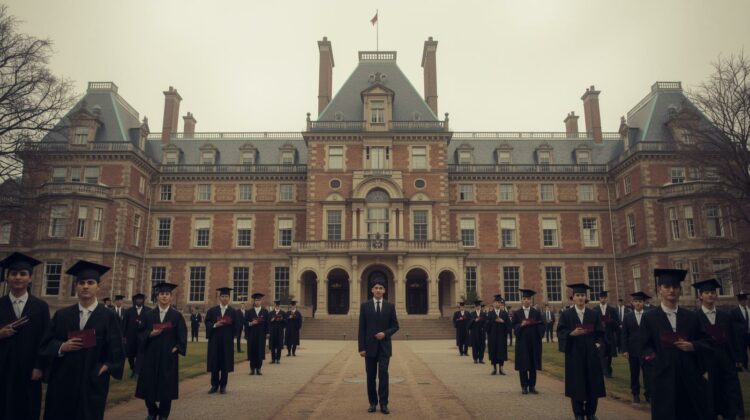
Walk onto almost any college campus, and the branding hits before the learning does. Shiny student centers, climbing walls, gourmet food courts resembling airport lounges. Somewhere between the latte bar and the merch shop, it becomes clear: these institutions are selling identity as much as education.
A degree now functions less as a proof of skill and more as a luxury logo. The question isn’t “Can you do the work?” but “Where did you go?” Parents and students buy into the prestige, hoping it will open doors—even when the doors remain mostly theoretical.
Take Maya, for example. Her parents stretched every resource to send her to a famous private university because “that name opens doors.” She studied communications, graduated with honors, and walked across the stage to cheering relatives. Six months later, she’s answering customer emails at a startup, making slightly more than a person stocking shelves at Target. The diploma—the symbol of status—does not guarantee the career outcomes promised.
The Rising Cost of Status
Colleges market themselves like passports to the middle class, but the market has moved faster than they have. Skills become outdated in a few years. Entire job categories appear overnight. YouTube tutorials, bootcamps, and online academies often outpace traditional lectures.
Meanwhile, tuition continues to rise. Dorms get fancier. The “college experience” starts to feel less like a launchpad and more like an overpriced club membership, with bills falling to “Future You”—who is usually less calm than “Present You” thinks.
Student loan debt in the U.S. has ballooned past $1.7 trillion, surpassing credit card debt. The average borrower leaves school owing tens of thousands for a piece of paper that may or may not lead to a stable job. The prestige comes at a high price, and the reality rarely matches the glossy brochure.
The Logic That Once Made College a No-Brainer is Cracking
For previous generations, a degree almost guaranteed a boost in income. Companies hired based on school name and major. Today, hiring managers scroll LinkedIn, seeking portfolios, projects, GitHub repositories, TikTok campaigns—anything that proves competence.
Your essays on medieval poetry or required general education courses won’t secure the job. Execution matters. The real currency is the ability to solve problems, create value, and deliver results. Education that clings to status and ceremony instead of adaptability risks becoming “nice but not necessary.”
Flipping the Traditional Path: Skills First
If the traditional college model feels overpriced or misaligned with your goals, start by reversing the order. Instead of choosing a college, then a major, then hoping for a job, start with the problem you want to solve or the work you enjoy.
Step 1: Identify the Work You Want to Do
Are you curious about design? Begin with free Figma tutorials. Redesign real websites. Share before-and-after shots publicly. Interested in data? Take an online SQL course, explore public datasets, and publish case studies on Medium or GitHub.
Step 2: Evaluate the Degree’s True Value
Ask yourself: does a traditional degree add something you cannot acquire faster, cheaper, or more directly? Sometimes the answer is yes, especially in highly specialized or licensed fields. Often, it’s not.
Step 3: Build a Visible Body of Work
Three real projects outweigh 30 graded assignments. Ship projects quickly, iterate publicly, and document the process. The more tangible your results, the more they speak for your ability—without needing a formal diploma to validate them.
Using College as a Tool, Not a Temple
For students already enrolled, there’s no need to abandon ship entirely. Instead, pivot strategically:
- Focus on classes that teach scarce, in-demand skills.
- Seek professors with real-world experience.
- Leverage campus resources—labs, office hours, Wi-Fi—to build projects outside the grading system.
The mistake is drifting, assuming the diploma alone will carry weight. College can be a toolkit, not a sacred badge.
Question the Price Tag
Compare the cost of a four-year degree to bootcamps, apprenticeships, or starting a micro-business. Ask yourself: am I paying for a credential, or am I investing in skills that have market value? Separating the emotional pull of prestige from practical outcomes is crucial.
Detach Your Self-Worth from Your School’s Name
Your value is not the logo on your hoodie. It is what you create, solve, and improve. Degrees can be helpful, but the real flex may be what you accomplish without one.
- Build proof, not paper: Portfolios, freelance work, and real-world output often beat diplomas in terms of employability.
- Learn directly from the market: Intern, freelance, or volunteer. Real clients provide feedback professors cannot.
- Compete on skill, not status: Use measurable outcomes to demonstrate your value.
Where Degrees Still Matter
It’s important to clarify: some paths require formal credentials. Surgeons, pilots, engineers, and nurses need accreditation for safety and regulation. The mispricing problem is in fields where a degree is optional for performance, such as marketing, media, tech, or design.
Many students pay luxury-level prices for knowledge they could acquire faster and cheaper elsewhere. Recognizing this distinction allows you to make smarter, targeted investments in your future.
Alternative Paths Are Growing
The next decade will be messy. Traditional colleges won’t vanish overnight—they have infrastructure, donors, nostalgia, and cultural inertia. But alternative pathways are booming:
- Online academies and bootcamps
- Cohort-based courses
- Apprenticeships
- Creator-led schools focusing on one skill deeply
Some students will still choose the traditional path; others will quietly step aside and build careers without permission slips. Stigma will fade as more non-degree professionals hire degree holders themselves.
The Hard Question to Ask Yourself
If your degree disappeared from your CV tomorrow, what would prove your value? Labs, internships, research, real work—these are measurable. If the answer is silence, the opportunity lies in what you build next.
Change starts personally, not institutionally. It begins with choosing to stop worshipping status and start compounding skills. The future belongs to those who keep learning long after tuition has ended.
Actionable Takeaways
- Question the status logic: Degrees often function as social badges more than skill builders.
- Reverse-engineer your path: Focus on the work you want, then find the fastest, most affordable route to qualify.
- Build proof, not paper: Real projects, portfolios, and public output matter more than grades.
- Use college as a toolkit: Treat resources as opportunities, not rituals.
- Detach self-worth from prestige: Your value comes from output, not logos.