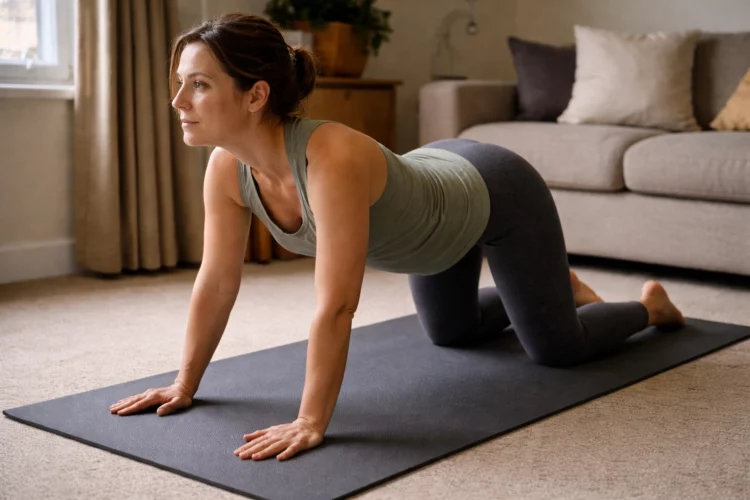
Improving flexibility does not require long workouts, advanced poses, or a studio schedule. What your body responds to most is regular, calm movement that encourages joints and muscles to open without force. A short, focused yoga flow can do exactly that.
This ten-minute routine is designed to fit into real life. It works just as well in the morning to wake the body as it does in the evening to unwind after a long day of sitting or standing. The emphasis is not on pushing limits, but on restoring natural range of motion, easing stiffness, and improving posture through steady breathing and simple transitions.
Why a short yoga flow works for flexibility
Flexibility improves when muscles feel safe enough to release. Long static stretches can help, but only after the body is warm and relaxed. A gentle flow creates that warmth first, then invites length gradually.
Short routines are often more effective because they are easier to repeat consistently. Ten minutes done most days will change how your body feels far more than an occasional long session.
This flow focuses on the spine, hips, hamstrings, and shoulders. These areas tighten quickly from modern habits and strongly influence how flexible and comfortable the rest of the body feels.
How to use this routine
Move slowly and breathe through each pose. If anything causes pain or sharp discomfort, ease out or modify. The goal is smooth sensation, not strain.
A yoga mat is helpful but not essential. Comfortable clothing and a quiet space are enough.
Plank Hold Timing by Age: How Long to Hold a Plank for Real Core Strength Without Strain
This 10-Minute Yoga Flow Gently Improves Flexibility and Loosens Stiff Muscles at Any Time of Day
Cat-Cow Pose for gentle spinal movement
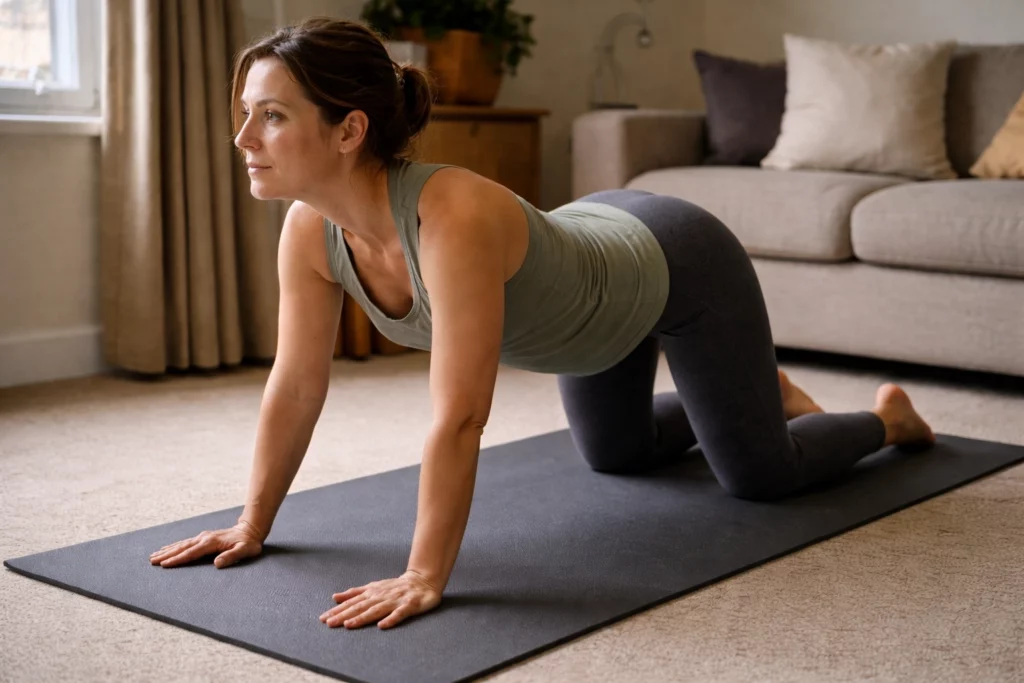
Begin on hands and knees, with wrists under shoulders and knees under hips. This pose gently warms the spine and connects movement to breath.
As you inhale, let the belly soften toward the floor. Lift the chest and tailbone, allowing the spine to arch naturally.
As you exhale, round the back. Draw the navel inward and let the head relax.
Continue flowing between these two shapes for about one minute. The movement should feel smooth and unforced.
This helps mobilize the spine, ease tension in the neck and shoulders, and prepare the body for deeper stretching.
Downward-Facing Dog to lengthen the back body
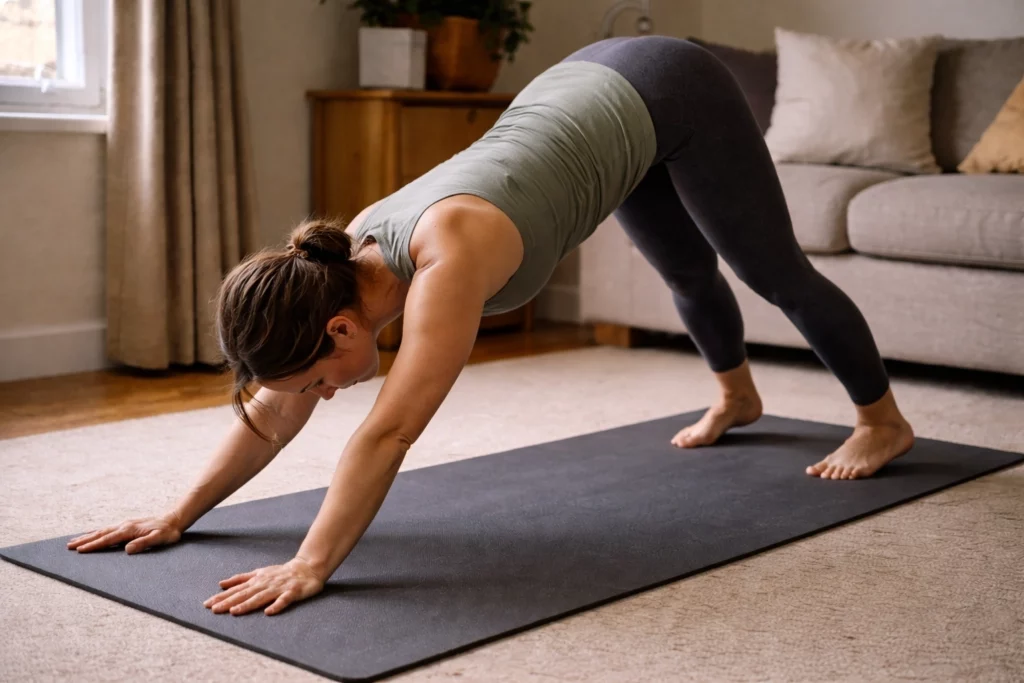
From hands and knees, tuck the toes and lift the hips up and back. Let the body form an inverted V shape.
Press the hands firmly into the floor and allow the spine to lengthen. Bend the knees slightly if needed so the back can stay long. The heels do not need to touch the floor.
Let the head hang freely between the arms and breathe steadily for about one minute.
This pose stretches the calves, hamstrings, and spine while gently strengthening the shoulders and arms.
Low Lunge to open hips and thighs
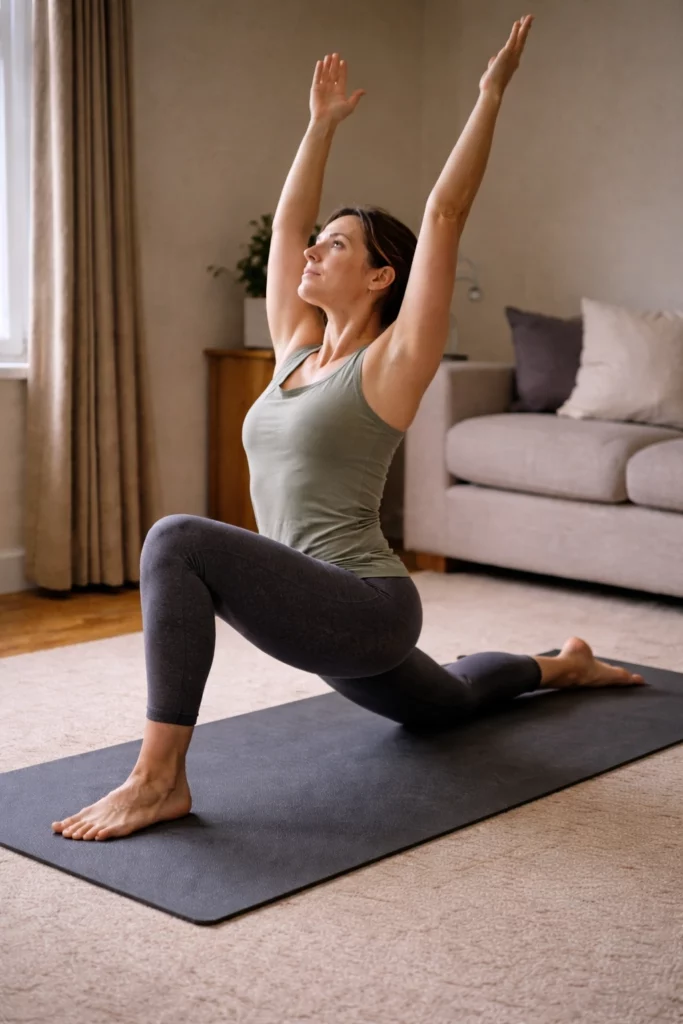
From Downward-Facing Dog, step the right foot forward between the hands. Lower the left knee to the floor and slide it back slightly.
Lift the chest and, if comfortable, raise the arms overhead. Keep the core lightly engaged so the lower back feels supported.
Hold for about thirty seconds, then step back and switch sides.
This stretch targets the hip flexors and quadriceps, areas that often become tight from sitting and contribute to lower back discomfort.
Seated Forward Fold for hamstrings and spine
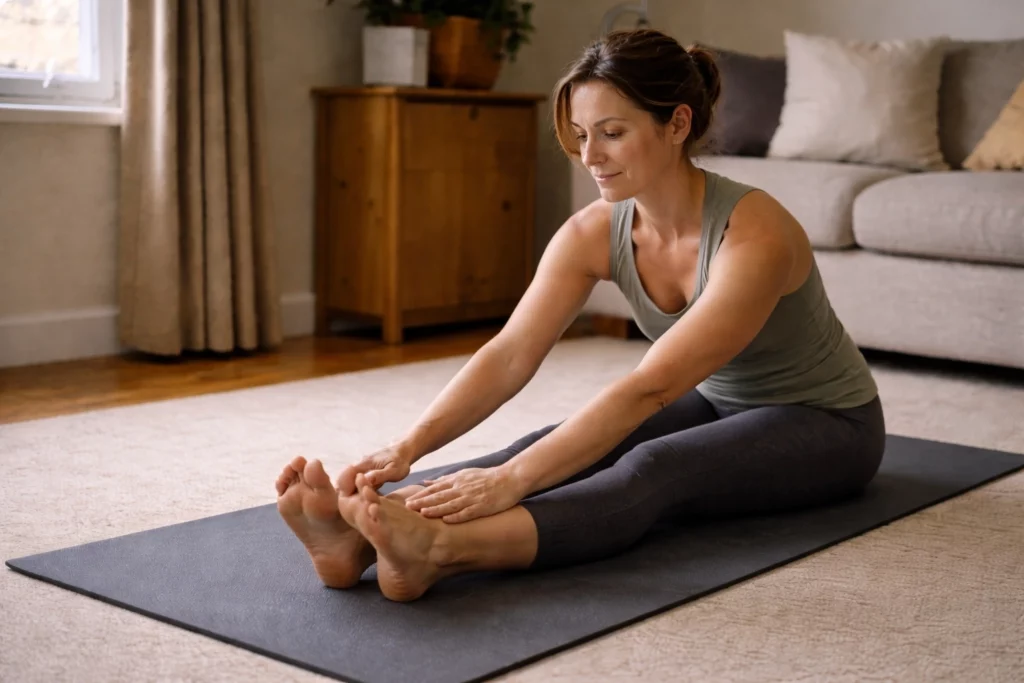
Sit on the floor with legs extended straight in front of you. Flex the feet gently.
Inhale to lengthen the spine. As you exhale, hinge forward from the hips rather than rounding the back. Reach toward the shins, ankles, or feet without forcing.
Stay here for about one minute, breathing calmly.
This pose lengthens the hamstrings, soothes the lower back, and encourages a relaxed release through the spine.
Butterfly Pose to ease inner thighs and hips
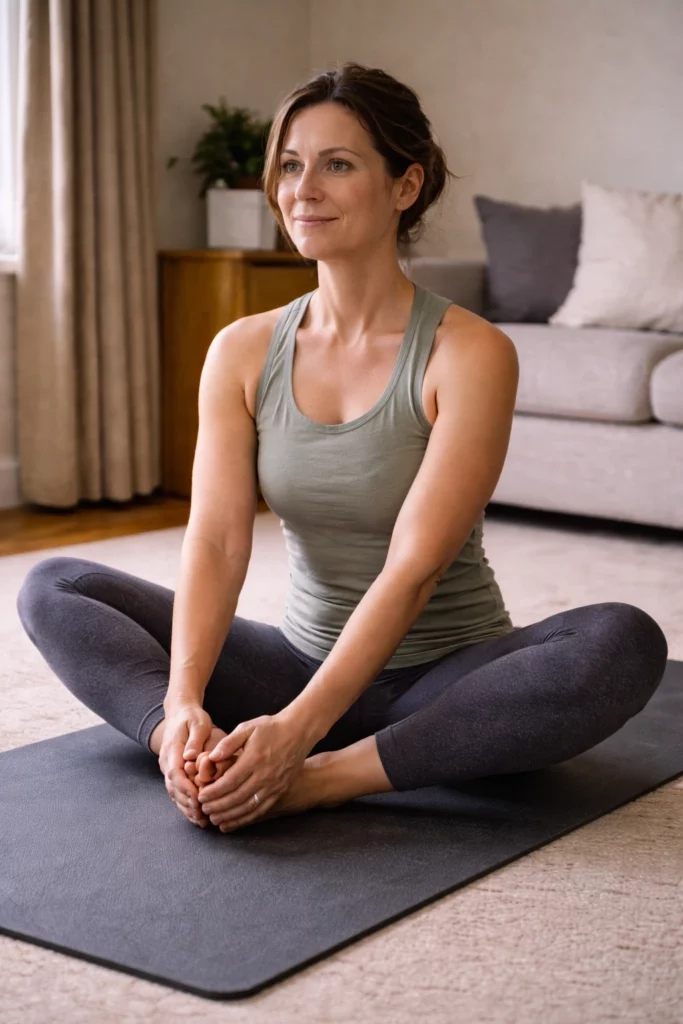
Sit upright and bring the soles of the feet together. Let the knees fall outward naturally.
Hold the feet or ankles and sit tall. If it feels comfortable, lean forward slightly while keeping the spine long.
Hold for thirty seconds to one minute.
This pose improves hip mobility and gently stretches the inner thighs, helping counter stiffness from long periods of sitting.
Pigeon Pose for deep hip release
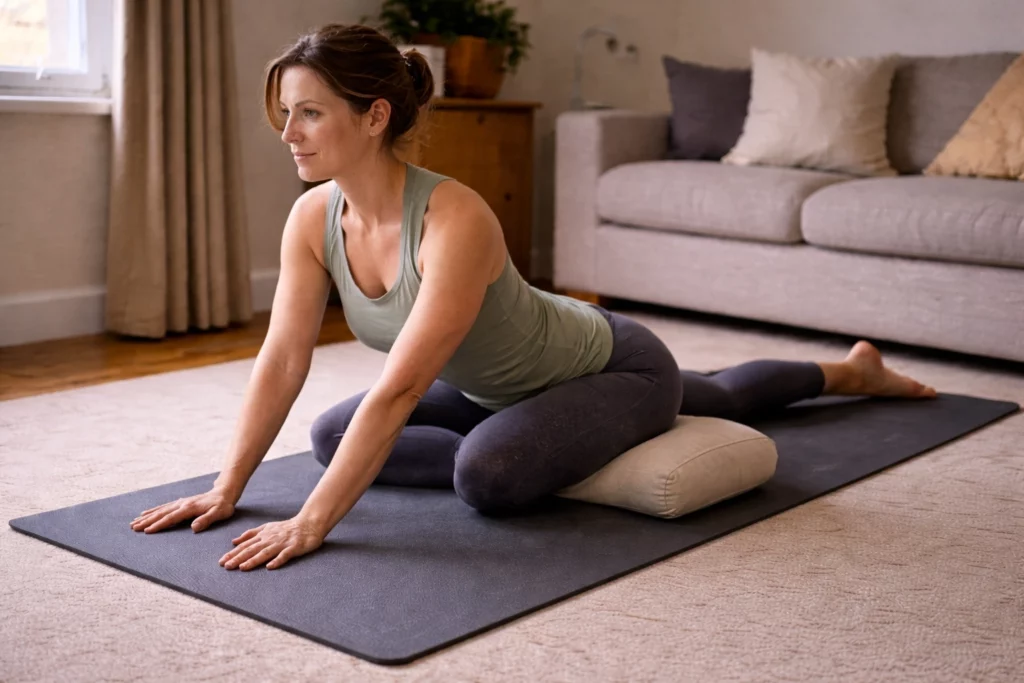
From hands and knees, bring the right knee forward behind the right wrist and slide the right foot toward the left side. Extend the left leg straight back.
Keep the hips as level as possible. Stay upright or fold forward if that feels better.
Hold for about one minute, then switch sides.
This is a deeper hip stretch that releases tension in the glutes and lower back. Use support under the hips if needed to stay comfortable.
Supine spinal twist to relax and reset
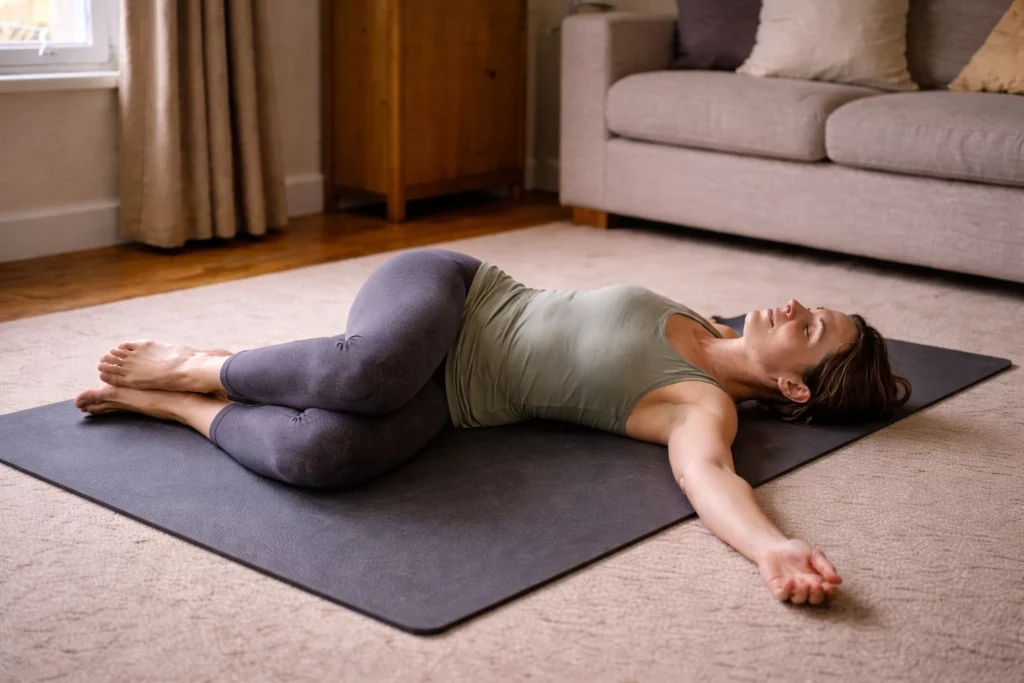
Lie on your back with knees bent and feet on the floor. Extend the arms out to the sides.
Let both knees drop to the right while keeping the shoulders relaxed against the floor. Turn the head gently in the opposite direction if comfortable.
Hold for thirty seconds, then switch sides.
This twist relaxes the spine, eases residual tension, and brings the nervous system into a calmer state.
What to expect with regular practice
This ten-minute flow is not about dramatic flexibility gains overnight. Its strength lies in consistency. Practiced daily or most days of the week, it helps joints move more freely, reduces stiffness, and improves posture.
Over time, you may notice everyday movements feel easier. Getting out of bed, bending down, or sitting for longer periods becomes more comfortable. The body feels less resistant and more cooperative.
Flexibility is not about forcing change. It is about giving the body frequent, gentle reminders that it is safe to move. This short yoga flow does exactly that, one calm breath at a time.