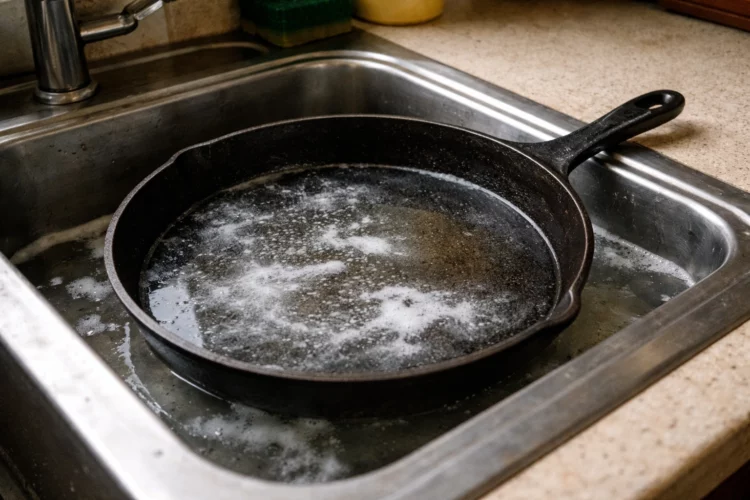
You notice it the moment you pull the skillet from the cupboard. The pan that once felt slick and looked jet black now wears a dusty gray film. There are faint orange freckles near the rim and a stubborn sticky patch where eggs once clung for dear life. You run a finger across the surface. It feels dry, uneven, almost chalky.
For a second, you wonder if you ruined it. You slide it back into the cupboard and reach for the nonstick instead.
What most people do not realize is that this awkward, ugly phase is exactly where cast iron is easiest to save. And the fix is not loud, aggressive, or expensive. It is a slow, old-fashioned soak that most modern kitchens have forgotten.
How cast iron quietly loses its magic
Cast iron rarely fails all at once. It fades gradually, almost politely.
One rushed wash with soap. One night left soaking in the sink. A quick air-dry on the rack instead of a minute on the stove. Over time, the seasoning thins. The pan shifts from deep black to patchy gray without a clear moment where you can say it went wrong.
Cooking changes before the look does. Food starts to grab in the center. Oil pools instead of spreading into that smooth, glassy sheen. You tell yourself you will re-season properly one weekend. Then weeks pass.
Ask anyone who cooks with cast iron long enough and you will hear similar stories. A roommate scrubs with steel wool to make it feel clean. A partner stacks the pan away while it is still slightly damp. A lid goes on before the heat has fully evaporated the moisture. Months later, rust appears and confidence disappears.
Cast iron carries a lot of emotion. People inherit pans. They associate them with family meals and slow Sundays. When a skillet starts to look tired, it can feel personal, like you failed at caring for something that mattered.
The truth is simpler and kinder. Most of what you see on a neglected pan is not damage to the iron itself. It is unstable seasoning, burnt oil, and surface rust. The pan underneath is usually fine.
Why aggressive fixes often make things worse
When cast iron looks bad, people tend to panic. They reach for harsh cleaners, power tools, or extreme oven methods. Sometimes those approaches are necessary, especially for severe rust. But most everyday pans do not need punishment. They need patience.
Scrubbing too hard can gouge the surface and create uneven texture that seasoning struggles to bond to later. Strong chemical treatments can strip everything at once, leaving bare iron exposed and vulnerable to flash rust.
What works better for a pan that feels rough, sticky, or dull is a gentler reset. Something that loosens what no longer belongs without attacking the metal itself.
That is where the forgotten soak comes in.
Forget Vinegar and Baking Soda Forever: The Half-Glass Nighttime Drain Trick Plumbers Actually Trust
The slow baking soda soak that resets the surface
This method is not about speed. It is about letting chemistry and time do the work.
Setting up the soak
Fill your sink or a plastic tub with very hot water. Not boiling, but hot enough that you would not want to leave your hands in it for long. Add baking soda and stir until dissolved. A good guideline is two to four tablespoons per liter of water. The water should feel slightly silky between your fingers.
Submerge the cast iron completely, including the handle. Leave it there for several hours. Many experienced cooks let it sit overnight.
During this time, the baking soda gently breaks down sticky oil residue, tired seasoning layers, and surface grime. It softens the gray film that makes the pan feel lifeless, without eating into the iron underneath.
What you will notice afterward
When you come back, the water may be darker, sometimes tea-colored, with small flecks floating on the surface. That is old residue letting go.
Lift the pan out and, while it is still wet and warm, scrub gently with a sponge or soft brush. Focus on feel rather than force. Many of the rough patches fade under your fingers with surprisingly little effort.
At this stage, the pan may look lighter and more matte than you expect. That can be unsettling. It feels like you stripped away something essential.
What you actually did is remove what was no longer helping. You created a clean, receptive surface for new seasoning.
Mistakes to avoid right now
Do not walk away and let the pan air-dry. Bare or freshly cleaned cast iron can develop surface rust quickly. Do not reach for harsh cleaners to make it feel extra clean. The soak already did its job.
From this point on, timing matters.
Turning bare iron back into smooth black steel
Once the soak and gentle scrub are done, rinse the pan with hot water and dry it thoroughly with a towel. Then place it over low heat on the stove. Let it warm until every trace of moisture is gone. This step alone prevents a lot of frustration later.
Applying oil the right way
Add a very small amount of neutral oil with a high smoke point. Grapeseed, canola, or sunflower oil all work well. Rub it into every surface of the pan using a paper towel or lint-free cloth.
Then wipe again. And again.
The goal is not shine. The goal is a barely-there film. Too much oil is the fastest way to end up with a sticky, uneven finish.
Baking the seasoning in
Place the pan upside down in a hot oven, around 230 to 250 degrees Celsius. Put a tray or foil on the rack below to catch any drips, even though there should not be many if the oil layer is thin enough.
Let it bake for at least an hour. Then turn off the oven and allow the pan to cool inside. As the oil heats, it polymerizes and bonds to the iron, forming the hard, protective layer known as seasoning.
One cycle often improves things noticeably, but the deepest black finishes usually come from repetition and regular cooking. Two or three cycles over a weekend can make a dramatic difference.
A restorer of vintage cookware once put it simply. Cast iron does not need perfection. It needs consistency. The gray stage is just the pan asking for a reset.
How often to do the soak and when to skip it
This baking soda soak is not a weekly ritual. Think of it as a reset button.
Once or twice a year is plenty for a heavily used pan. Many skillets never need it at all if they are dried well and lightly oiled after use.
If your pan has light surface rust, sticky spots, or that dull gray feel, the soak is appropriate. If the pan is severely rusted or pitted, a more thorough restoration may be needed.
Enameled cast iron should not be treated this way. The soak described here is for bare cast iron only.
Living with cast iron without turning it into a chore
Once you bring a tired skillet back to life, something shifts. You stop seeing cast iron as fragile or intimidating. It becomes a tool again.
You start noticing small warning signs early. A tacky patch where oil built up. A faint rust dot near the rim. Instead of guilt, you feel calm. You know what to do.
Rinse while the pan is warm. Scrub gently. Dry on heat. Rub in a whisper of oil. Cook.
Cast iron is remarkably forgiving when you meet it halfway. That deep black finish is not a single moment of perfection. It is the result of small, steady habits and the occasional slow soak when things drift.
Common questions about the baking soda soak
Will this remove all the seasoning?
A moderate soak mainly targets unstable or sticky layers. If your seasoning is already thin, you may expose some bare metal. That is not a problem. It rebuilds quickly with oil and heat.
How long is too long to soak?
Four to twelve hours works for most pans. Longer is rarely necessary. If you are unsure, start with a few hours and check the surface.
What if I see rust right after soaking?
That usually means the pan stayed wet too long. Scrub lightly, rinse, dry on heat, and move straight to seasoning. The rust will disappear.
How do I keep the pan black afterward?
Dry it completely after washing, add a tiny amount of oil before storing, and cook with fats regularly. Everyday use is the quiet secret to beautiful cast iron.
Cast iron does not ask for constant attention. It asks for the occasional pause, a warm bath, and a thin layer of care. When you give it that, it gives you decades in return.